
When Will This End
Dec 24, 2025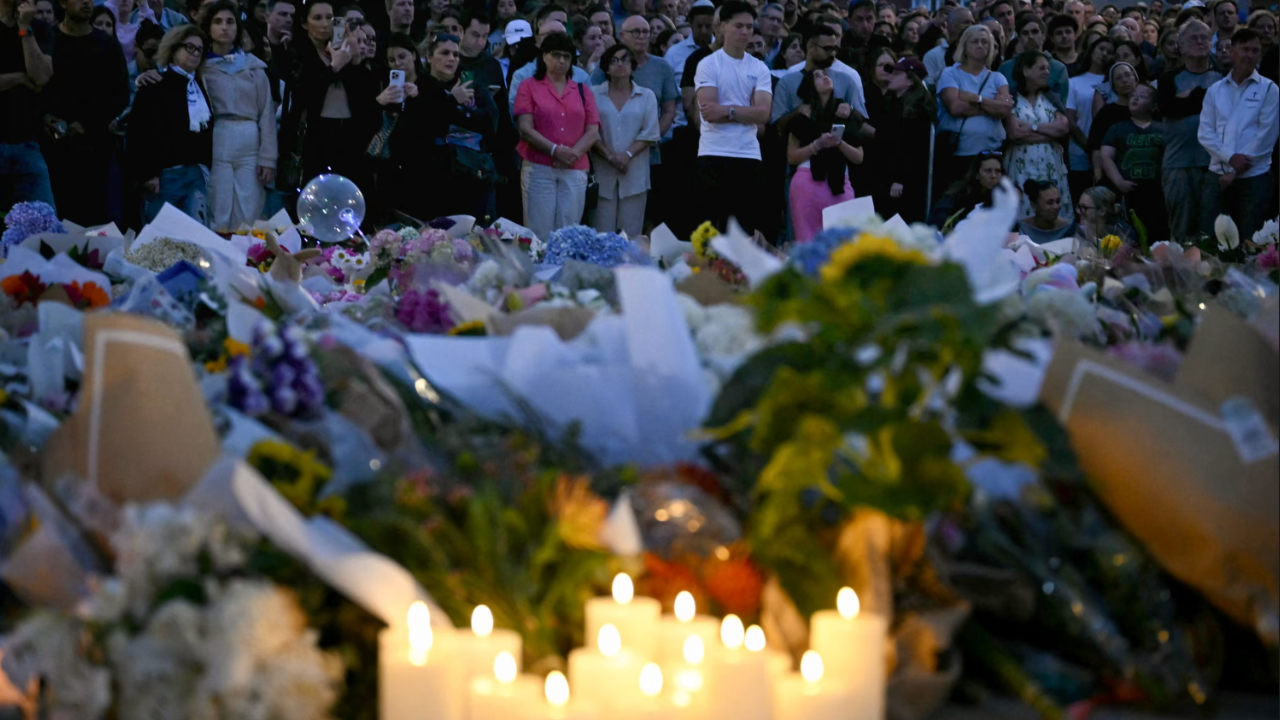
Photograph: Saeed Khan/AFP/Getty Images
Author's Note: This piece was originally drafted and shared on December 24th, 2025, and edited on Wednesday January 21st, 2026. Following the massacre in Bondi, I have spent the intervening weeks listening, asking more questions, reading more critically, and sitting with the pain of my Jewish friends and colleagues, as well as my own. This updated version reflects that deeper reflection and my commitment to moving from silent observation toward active solidarity.
There’s a question that has stayed with me.
When will this end?
It came up in a private conversation early this year (2025) with a Jewish friend and colleague who was carrying the weight of accumulated loss and the exhaustion of witnessing human suffering repeat itself.
October 7th was the catalyst for our conversation, but what she was grappling with reached both deeply into and far beyond one date. She was expressing both the heaviness she felt from the weight of a world that often asks the Jewish community to carry its trauma in silence, and the broader, recurring reality of human cruelty and loss across the world.
At the time, I remember wanting to help. Wanting to steady the space. Wanting, if I’m honest, to offer something like reassurance.
I also wanted to believe — and wanted her to believe — that regardless of the form devastation takes, there is always a pathway back to meaning. That somehow, someday, it would end. That the cruel, senseless harm humans could be capable of would stop. That "Never Again" would finally be a settled reality rather than a recurring plea.
That belief felt supportive then. Now, looking back, I can see it for what it also was: a form of scaffolding. A way of helping my nervous system choose love in a world that violates it.
What I didn’t understand then, and have come to understand since, is that the question “when will this end?” doesn’t always want a tidy answer.
Sometimes it’s grief speaking out loud. Sometimes it’s exhaustion. And sometimes it marks the edge of a transition, one where the stories of "universal progress" no longer hold, and the demand for real, active solidarity begins.
That question all those months ago has followed me since.
This past week, after the targeted massacre in Bondi and the heavy aftershocks rippling through our city, it surfaced again. I’ve been quiet. Not absent, but reflective. Reaching out privately, and sitting in conversations with friends who are Jewish. Listening. Witnessing the way people simultaneously carry grief while also bracing for what often comes next: simplification, polarisation, and the pressure to declare which pain counts, and who for.
I’ve found myself holding that question again, 'when will this end? ', and noticing that I don’t have an answer, and that maybe none of us do. But I do have a choice.
A lot of people cope with horror by collapsing into binaries . The good guys and bad guys, right side and wrong side. It can feel stabilising, like giving the mind somewhere firm to stand when everything else is moving.
But binaries come at a devastating cost. That cost shows up in the way grief gets ranked, in the way pain becomes comparative and in the way people are asked — explicitly or subtly — to make their suffering quieter so someone else’s can be heard. And in the way conversations start to orbit around who is allowed to be devastated, and who must swallow it.
I see the pressure on the Jewish community to swallow their devastation, or to have it measured against global events, as if one person's pain must be balanced against another's.
I don’t understand that framework. I reject the idea that we must 'balance' our compassion when a community is bleeding.
What I keep coming back to in my own sense-making is something I’ve carried for years - the distinction between necessary suffering and unnecessary suffering.
There is necessary suffering in life. Loss. Death. Grief. The pain that comes with loving deeply in a world that cannot be controlled. But what we saw at Bondi was unnecessary suffering. It was the result of dehumanisation and a specific, ancient hatred, antisemitism, that we have allowed to fester in our silence and standing back.
What I am committed to working against are the "small" violences we excuse because they’ve become common: the casual antisemitism and ignorance in our social circles, the silence in our workplaces when Jewish colleagues are targeted, and the tropes we let slide because we don’t want to cause a scene.
Meaning is not something we find; it is something we protect.
Recently, I learned of metastability, the idea that the human brain doesn’t stay healthy in perfect, rigid order. Health lives at the edge, where there is enough stability to function and enough movement to adapt.
Maybe solidarity is like that too. Maybe it's not about having perfect, rigid answers, but about standing at the edge of the chaos and refusing to abandon each other. It’s about learning that love cannot be broken by violence, but it can be weakened by our silence.
What I do know is this: love cannot be broken in the way violence hopes it can be. Even when it appears destroyed, it recycles itself, through friendship, faith, memory, quiet solidarity, and the choice to remain human when it would be easier to harden.
But I believe love, and the power it brings us, can be weakened by our silence.
A close Jewish friend said something to me this week while we were on a call, and I wrote it down, right away. I share her words, with permission and care :
“The loudest voices haven’t been ours up until now. As a community, we need to band together. I hope that more people can recognise now that corridor conversations and comments that reinforce old stereotypes, do nothing but harm and divide.”
This past week, here words have felt like something I could hold onto as an anchor of what it means to live with values aligned action. Impact isn’t only found in what we say publicly; it lives in the background moments. In the conversations we choose to interrupt even when it’s awkward. In the assumptions we refuse to pass on. In the restraint we practise when it would be easier to harden or dismiss, and in the active choice to stand as a shield for our neighbours.
So this is where I land, for now.
Not with answers, but with a stance.
-
I stand for the safety and dignity of the Jewish community.
-
I stand against dehumanisation in every direction.
-
I stand for a world where we no longer allow antisemitism or old stereotypes to go unchallenged.
I don’t know when this ends. I’m no longer trying to pretend that I do. But I know that it won’t end through silence. It ends when we decide that "Never Again" is an active, daily promise that we keep for one another.
I am still here. And you are too. Still learning, still choosing love, and not as a sentiment, but as the courage to remain human and protective when the world feels most dark.
A Note on the National Day of Mourning
Tomorrow, Thursday, January 22nd, 2026, marks the National Day of Mourning to honour the 15 victims and those impacted by the Bondi beach massacre on 14 December, 2025. I’ll be joining my Jewish friends and people across the country, in a collective moment of remembrance and to observe the theme chosen by the Chabad community: “Light will win, a gathering of unity and remembrance.”
There are many ways to participate, including a nationwide minute of silence at 7:01 PM and the beautiful tradition of performing a Mitzvah (a good deed) in honour of those who no longer can. These acts range from visiting the sick and checking on neighbours, to simply traveling with more care and kindness throughout your day.
I’ve found the information and suggested practices shared by the community and the NSW Government incredibly helpful in knowing how to stand in solidarity.
If you feel called to join in, you can find the full list of 15 suggested Mitzvahs and details on the candle lighting and condolence book at the links below:
- Chabad of Bondi - with information and links to support the Bondi Community and families impacted by the attack directly
-
Light Will Win: A Gathering of Unity and Remembrance (Woollahra Council) -
Official Bondi Beach Online Condolence Book (NSW Government)
There is no replacing what was lost, but there is a way to carry the legacy of the people who were murdered forward—by remembering them not just for the tragedy, but for the lives they lived, the families who love and miss them deeply, and by refusing to be silent.
To light.
